
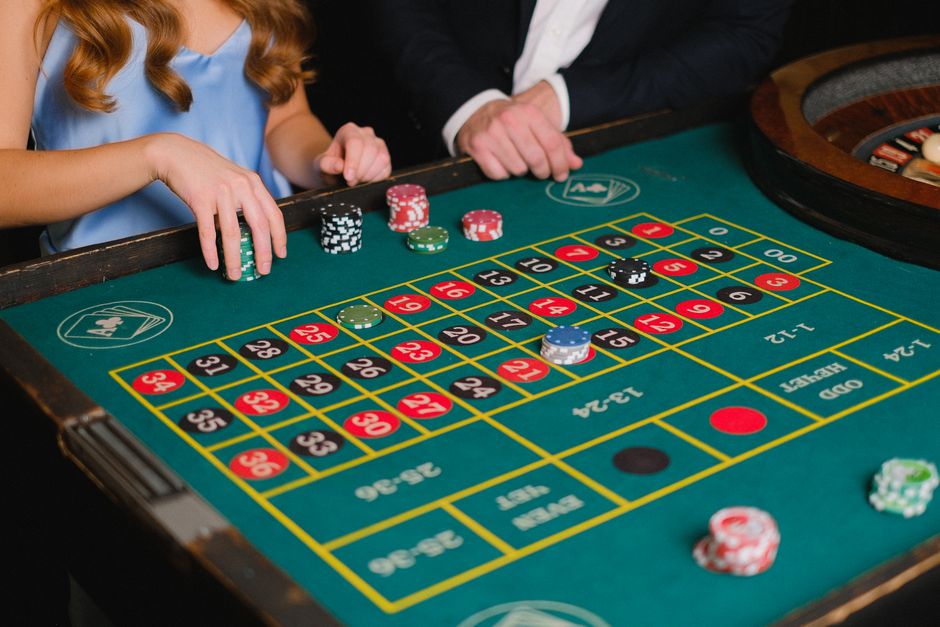
Most casino players pick a slot the same way they pick a Netflix show: the theme looks fun, the colors pop, and the jackpot number is big enough to imagine quitting your job. Nothing wrong with that. But if you play regularly and never once glance at a game's RTP, volatility, or hit frequency, you're essentially gambling on vibes. And vibes don't pay.
The numbers printed on a slot's info page aren't marketing fluff. They're the closest thing you'll get to a personality profile of the game, and understanding them changes how you budget, how long you play, and whether you walk away annoyed or satisfied. Let's break down what's actually going on under the hood.
Return to Player (RTP) is expressed as a percentage, usually between 94% and 97% for online slots. A 96% RTP means that, over millions of spins, the game pays back 96 cents for every dollar wagered. The house keeps the rest. You will find a helpful summary at nhacaitangtien.com.co.
Here's where people get twisted up. That 96% is not a promise for your session. It's a theoretical average across an enormous sample size. You can play a 96% RTP slot for an hour and lose 40% of your bankroll. You can also hit a 500x win on spin three. RTP is about the machine's long-term behavior, not yours.
What RTP is useful for is comparison. Two slots with similar volatility can have RTPs of 94.5% and 96.5%. That 2% spread sounds trivial until you realize it's the difference between the casino keeping $5.50 or $3.50 per $100 wagered. Play 5,000 spins at a dollar each and the math tilts hard in favor of the higher RTP game.
If RTP is the long-term average, volatility (sometimes called variance) is the ride. This is the single most useful number for actually planning a session.
A concrete tip: match volatility to bankroll. If you're depositing $50 for an evening, a high-volatility slot with a $1 minimum bet may wipe you out in ten minutes. Low or medium volatility keeps you in the game long enough to actually experience a bonus round.
Hit frequency is the percentage of spins that produce any win. A slot with 25% hit frequency wins on one in four spins. Sounds great — until you notice those wins are often 0.2x your stake. Conversely, a 12% hit frequency game with chunky payouts can feel dead for long stretches but produce satisfying hits.
Bonus frequency matters just as much. Most slots trigger free spins somewhere between 1 in 150 and 1 in 400 spins. If you know the game triggers a bonus roughly every 250 spins and you've spun 220 times without a single feature, you're not "due" — the reels have no memory — but you're statistically in the neighborhood where it's expected to appear. That knowledge helps you resist the urge to switch games five spins before a bonus.
Slot math is fixed. Table games and betting markets are where player skill actually moves the needle.
Poker is the only casino game where you play against other players, not the house. The rake (typically 5–10% of each pot) is the house's cut, and beating it consistently over thousands of hands is the mark of a winning player. Unlike slots, your edge isn't fixed — it's built from position, bet sizing, and reading opponents.
Sports betting sits somewhere in the middle. A sharp bettor can exploit soft lines, but the bookmaker's margin (the vig) means you need roughly a 52.4% win rate at -110 odds just to break even. Compare that to a slot's built-in 4% house edge and it becomes clear: slot players are buying entertainment, bettors are grinding an edge, and poker players are running a small business.
Forget the "only bet what you can afford to lose" platitudes. Here are specific numbers.
None of this means you can't enjoy a flashy Egyptian-themed megaways slot. It means you should know what you're buying. A 96% RTP game with medium volatility and a 1-in-200 bonus rate is a fundamentally different product from a 94% RTP high-volatility grind. Same spinning reels, wildly different experience.
The players who last — the ones who aren't tilted after an hour — tend to be the ones who read the info screen. They pick games aligned with their bankroll, adjust stakes when variance bites, and treat the whole thing as entertainment with a defined cost.
That's the real edge in iGaming. Not a hot streak, not a "system," not the newest megaways release. Just knowing the numbers before the first spin.

Hi, my name is Anthony kuber. I am artist and fashion designer.
I love to travel and writing blogging.
Your email address will not be published. Required fields are marked *
Software Developer & Writer
Hey, I'm Diva, a developer and writer blending code and creativity. I'm driven by a deep curiosity and a relentless pursuit of excellence. Join me as I craft digital solutions and captivating stories.


