
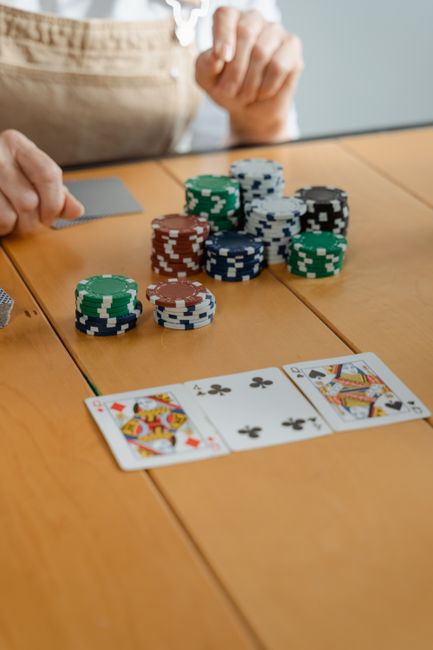
Almost nobody loses money at a casino because they got unlucky. They lose because they never stopped to understand the machine sitting in front of them. Whether it's a spinning slot reel, a poker table full of regulars, or a Saturday afternoon accumulator, the same handful of numbers quietly decide who walks away with a profit. This piece is about those numbers — not to scare you off gambling, but to make you a sharper player than the person next to you.
Every casino game carries a built-in advantage for the operator, called the house edge. It's the mathematical slice the casino keeps over the long run, and it varies wildly from game to game.
Here's the practical takeaway. At a 0.5% edge, a player betting $100 hands might lose about $5 per hour at 10 hands per minute. At American roulette, that same level of action burns through $50 or more. Over a weekend, the difference between choosing European roulette and its American cousin can be hundreds of dollars — for an almost identical game. That's not luck. That's decision-making. Some of the clearest guidance on this comes from สล็อตเว็บตรง.
Slots dominate casino floors for a reason: they're fast, they're solo, and they don't require a rulebook. But they're also the hardest games to evaluate from the outside.
Modern video slots run on RNGs (random number generators), and the payout percentage is baked into the game's math model, not adjusted in real time. A 96% RTP machine returns $96 for every $100 wagered — averaged across millions of spins. In any single session, that number is essentially invisible. You can hit a 500x bonus on your third spin or grind for four hours and see nothing but near-misses.
What matters is how that 96% is delivered. A low-volatility slot spreads small wins frequently, keeping your balance steady. A high-volatility slot (think Megaways titles or anything advertising a 50,000x max win) hoards the payout into rare, enormous hits. Two machines with identical RTP can feel like completely different games. Pick volatility to match your bankroll, not your mood.
Poker is the one major casino game where the house doesn't play against you. In a cash game, you're competing against other players, and the casino takes a small rake (typically 5% capped at $3 to $5 per pot). That means a skilled player can be genuinely profitable over thousands of hands.
But here's the uncomfortable reality: the majority of online poker players are long-term losers. Not because of the rake — because of the skill gap. GTO solvers, HUDs and multi-tabling regulars have compressed the edge available at every stake. A casual player who'd crush a $1/$2 home game often can't beat a 5-cent/10-cent online game.
Where does the edge come from now?
Bookmakers don't gamble. They price events and take a margin — the vig — typically embedded in a -110 line on both sides. Convert that to implied probability and you'll see the true cost: a fair coin flip would be ±100, but the book offers ±110, meaning you need to win 52.4% of the time just to break even.
Accumulators feel like the fun part, and that's exactly why they're profitable for the operator. A five-leg parlay multiplies the odds but also multiplies the house edge dramatically. Five picks with a 4% edge each becomes an overall hold several times larger. The payout looks enormous; the probability of hitting it is usually brutal.
Sharper bettors tend to do the opposite: single bets, focused on markets they actually understand, often using exchanges or low-margin books. Line shopping alone — comparing prices across three or four reputable sportsbooks — can swing your long-term return by a full percentage point or more.
There's a famous line that the house always wins. It's true in aggregate, but it hides something useful: operators earn their money from volume and time, not from tricking you on a single spin. The longer you play and the worse your game selection, the more certain the outcome becomes.
So flip the logic. If you choose low-edge games like blackjack and baccarat, learn a little poker strategy, shop betting lines, and treat slots as entertainment with a fixed cost rather than a plan to fund your retirement, you move from being the crowd to being one of the small percentage of players who genuinely enjoy the game on reasonable terms. That's the whole game, really — not beating the casino, but refusing to be the easiest person in the room to beat.

Hi, my name is Anthony kuber. I am artist and fashion designer.
I love to travel and writing blogging.
Your email address will not be published. Required fields are marked *
Software Developer & Writer
Hey, I'm Diva, a developer and writer blending code and creativity. I'm driven by a deep curiosity and a relentless pursuit of excellence. Join me as I craft digital solutions and captivating stories.


